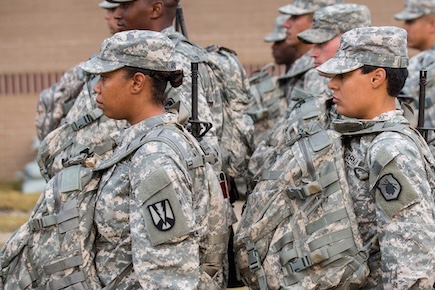
Steve Woolford talks about assisting service members who are seeking confidential advice on how to apply for conscientious objector status, and the troubling issues these men and women are confronting in their deployment in the U.S. war on Iran.
SCOTT HARRIS: We’re going to get started right now with our first guest, and that’s Steve Woolford. He’s a resource counselor with Quaker House in Fayetteville, North Carolina, and the GI Rights Hotline, where he provides free and confidential support to military service members. And we’ll be talking about the assistance he and other volunteers provide to military service members seeking advice on how to apply for conscientious objector status and other questions they have about the troubling issues they’re confronting, both men and women in our armed services during their deployment in this U.S. war in Iran and elsewhere, especially in the shooting at fishing boats that are allegedly drug boats in the Caribbean and the Eastern Pacific. But Steve, I wanted to welcome you to the show first, and thank you so much for making time for us.
STEVE WOOLFORD: Oh, you’re welcome, Scott, and thanks for having me on.
SCOTT HARRIS: So first of all, just tell our listeners about the GI Rights Hotline and the assistance and guidance that you offer to U.S. military service members.
STEVE WOOLFORD: Sure. Well, I am, as you said, a resource counselor with Quaker House, and I am one of the people who staff the GI rights hotline. And we are a non-governmental, nonprofit organization that provides information to service members and their families about all kinds of issues that they’re having with their military service. A lot of the people calling us are people who are trying to get out of their military contract early, because as most people know, you can’t just quit when you’re in the military the way you could quit if you’re in a civilian job that you don’t like. You’re required by law to finish your contract unless you fit into some category for discharge. We also get calls from people who are staying in the military, but trying to address other kinds of issues like lack of good healthcare coverage or they’re victims of racism or some are having other kinds of problems.
So there’s a wide range of things we cover. And I think you mentioned a topic that’s been very popular lately, which is conscientious objection. Should I explain what that is?
SCOTT HARRIS: Yeah. I think I wanted just to frame this as widespread opposition here in the United States to the war in Iran and that has a lot to do with the erratic way that the war has been conducted; the lack of clarity when it comes to the strategy and objectives in this war that Trump envisioned to only be a week or two, now it’s six months and no clear end in sight. And then of course we have a lot of morale problems that are coming to the surface now that I know you’ll be talking about tonight, and that is people on the USS Lincoln aircraft carrier. Shortages of food, sanitation, and a whole range of problems that have developed because of the longevity of this war and the lack of planning. That’s pretty clear. So against that backdrop, I did want to first ask you about what kind of increase in numbers of inquiries you’re having lately from people who are dissatisfied with their military service and concerned about, again, the issues of the lack of clarity on the mission here in this war in Iran and other problems at the Pentagon that I know we’ll touch on.
STEVE WOOLFORD: Sure. Well, we are having one of our busiest years ever in the 25 years that I’ve been a counselor with Quaker House. And this year in particular, we have had the two busiest months that we’ve ever had in that 25 years, and those coincided with the start of the war in Iran. And I think that’s because that war is very unpopular with service members. So we still got a lot of the regular calls we get day in and day out, but by far, the majority of that increase was people who were upset for multiple reasons with this particular conflict and just don’t want to be part of it.
SCOTT HARRIS: And I’ve read that there’s growing concern inside the military, not only with the war in Iran, but the targeting of fishing boats, allegedly drug smuggling boats in the Caribbean and Pacific, where right now we have a tally of 68 strikes and last I read, 227 people being killed without any evidence being presented to the connection these people may have had with drug smuggling. And further, drug smuggling, if it could be established with these individuals, does not receive the death penalty as is being meted out by the U.S. military at present. So there’s concerns about that. There’s concerns about international law among those serving in the Navy and Air Force when it comes to bombing what they are concerned are civilian infrastructure that could violate international law. And then of course there’s the whole range of things that the former Fox News Weekend host Pete Hegseth, who now calls himself the secretary of war, that seem to be running against a lot of opposition in the U.S. military, both the long-term and enlisted men and women who are part of the service.
There’s a wide range of things here, but maybe Steve, since you’re the one talking to these folks, maybe you can run down a summary of some of the most frequent complaints and concerns you’re hearing about.
STEVE WOOLFORD: Right. Well, I will say the military is a huge institution and so there’s all kinds of people, some of whom are very political, some of whom don’t pay that much attention to politics. So I don’t want to try to paint a picture that everyone in the military has the same belief, but I can give some generalizations here and talk about some trends we’re seeing. One thing I’ll say that I think you were just touching on is there does seem to be a pattern of events that callers have talked to us about that have been very troubling to them. And for a lot of people, this started even earlier with the conflict in Palestine. And some people are surprised by that because it wasn’t our troops doing the fighting, but I think a lot of military people had access to footage of what was happening in Palestine.
And it was really upsetting to them just to see it, but also to feel like in their eyes, their government was on the side of backing what they saw as a genocide. And so that led to a lot of distrust of the government by people in the military. I think they’ll draw conclusions like if our government’s going to support this country committing a genocide, well, certainly it would have no hesitations about sending me into a genocide, or at least they had doubts. I don’t know if I should say it’s certain for everyone, but people had doubts and concerns.
And so there’s people who are already questioning when they’re seeing those events. And then we had a huge spike in calls when the government started sending National Guard members into U.S. cities. And we had a lot of calls from people saying things like, “Look, I signed up to defend the country, but I didn’t sign up to point a rifle at other U.S. citizens, especially people who look like they’re doing First Amendment legal things.” And I also had calls from people in the California National Guard, some people might have a picture in their mind of who the members are, but there’s quite a few members who themselves perhaps weren’t born in the United States or whose parents and relatives weren’t born in the United States.
And so for them, the idea that they were being sent in to help ICE deport people from their own community, some of whom they might even be related to, was another upsetting event in this chain. Then there were people watching the things you just talked about in Venezuela. And if you took one of these things by itself, I think it’d be troubling, but when people see one after another, they’re really concerned. And then when the war in Iran started, I think people were so ready to distrust the motivations. And when there really weren’t any motivations given, it really just seemed to lead to all kinds of opposition from people in the military of what are we doing here? This just doesn’t make any sense. We don’t see any purpose or point to this. So we’ve had a lot of people calling about opposition, and it might be helpful if I just break for a second here and share some definitions of categories.
SCOTT HARRIS: Yes, please do.
STEVE WOOLFORD: The military offers a discharge for people who are conscientious objectors and they have to make their case. In fact, they have to show—no one scrutinizes their decision to join very carefully. If you enlist in the military, no one quizzes you on your motives or scrutinizes how serious you are or whether you truly believe it or anything like that. But if you talk about wanting to get out based on your faith, then there’s going to be a lot of scrutiny of that decision. And a person who wants to get out for conscientious objection has to really show a change in belief because earlier they joined the military agreeing to participate. They also have to show that they’re opposed to any war that they could be asked to fight in.
And we have lots of people who have gotten to a place where they say, “I’m ready to get out. I don’t think I can be part of any war. I feel like I’m against war in general.” And we can really help those people get out for conscientious objection. But there’s another category of people who I might describe as good soldiers or good sailors, good Marines who truly believe that if there was a real war for defense, they wouldn’t have a problem taking up arms and being part of defending the country. But they don’t feel like the current war is part of that. And unfortunately for them, there’s no such category as political objection. So for people who do believe in armed defense as part of a military and are very upset about these wars, they’re a lot more stuck and they have fewer options. And we can go into more of that, but I thought it’d be worth just clarifying that not everyone who has legitimate reasons to be distrustful of this war automatically qualifies as a conscientious objector.
SCOTT HARRIS: No, that’s very clarifying. And I know we’ll get into some of the details in the time we have remaining. We’re speaking with Steve Woolford, a resource counselor with the Quaker House in Fayetteville, North Carolina and the GI Rights Hotline. We’re talking about the increase of numbers of inquiries that Steve and others are getting around the country, groups that are providing advice and guidance for those service members concerned about the current state of things in the U.S. and the war in Iran and the other issues that we’ve talked about tonight already. Steve, I did want to ask you about the message in November 2025 that six lawmakers with military or intelligence backgrounds released on a videotape. They reminded service members of a clear rule, troops must refuse illegal orders that break the law or the Constitution. And as a result of that message out on that video, President Trump asked for their prosecution.
A federal grand jury declined to indict those six Democratic lawmakers. That decision came in February of this year. But at any rate, how much impact do you think that message from these legislators had on service people who maybe that message resonated with them?
STEVE WOOLFORD: Yeah, that’s a good question. I’ll admit that it’s hard for me to say because when I think of the things people have brought up with me as their concerns, not many people mentioned that. They didn’t talk about that specific issue. That doesn’t mean it doesn’t affect people. I don’t have as much information about that. But what I can say, and this will show some of maybe what I call the politicization of what’s considered legal and not legal in war. I don’t think it was controversial very long ago to say, “Oh, we don’t order people to do illegal things. Of course, people shouldn’t follow illegal orders, but that’s not going to be a problem because we’re never going to give them illegal orders.” So normally that was an issue the military would’ve agreed with. They might’ve disputed what they considered to be a legal order, but they weren’t challenging the idea that saying people shouldn’t do illegal things was a threat to the government because I think there was agreement that people aren’t supposed to do illegal things.
So it was a really weird situation to have some people saying, “You shouldn’t do illegal things,” and someone else saying, “That’s treasonous to say that.”
SCOTT HARRIS: Absolutely. And I think it’s clear that a lot of people came to their concerns on their own. They probably didn’t need a prompt from these Democratic legislators to echo that concern. But at any rate, Steve, I did want to ask you about the process. When you have service members who are interested in pursuing a conscientious objector application, what’s the process like in brief? And is it fair? Are there repercussions? Are there disciplinary actions or retribution that these soldiers, sailors, and Marines will face if they go down that road?
STEVE WOOLFORD: That’s a good question. So part of the application process requires someone to answer some specific—we’ll call them essay questions that the military asks, which basically require them to explain what the beliefs are that they’re basing their objection on and how they came to have these objections. And some people, that’s an easy process for. Other people I think know in their heart things are wrong, but maybe up until now in life, they haven’t really been exposed to a vocabulary for talking about nonviolence or being opposed to killing or things like that. Some people who come from different religious traditions have biblical language that they connect with, but for some people it’s hard to put it into words.
And when people call us, we’re never really trying to tell anyone what they should believe or change their beliefs. Part of our role is just, I guess, looking over drafts they write and interviewing them and helping them to get their own beliefs down on paper in a way that somebody else can follow so that they can be approved in this process.
So a lot of what we do is just kind of work with people on getting that written application to truly reflect what they’re all about and how this story went and get them to include a lot of details, some of which can be hard for them to talk about.
Today, I believe I had four people calling just to inquire about conscientious objection just in a single day. That’s a good number. And two of them had already been deployed in the war with Iran in different capacities. And they were saying, “Going over there and seeing what I saw and being part of it just changed my whole outlook on war here.” So part of what we do is help them explain that and get those stories down so that someone can follow the process. Most of the people who we talk to who apply for conscientious objection haven’t been shirkers or haven’t seemed like cowards or anything like that in their military career up until this point.
And a lot of them do come up with a way to explain things that seem sincere and heartfelt or that is sincere and heartfelt. And so when you ask how they’re treated, I think commands aren’t always sure what to do with them because they have to transfer them to non-combatant duties while they’re in the application pipeline.
And because these people are pretty sincere, honest people, usually they get treated a lot better by their peers than they expect. And they’ll have people who say, “I can’t believe you believe that or that’s terrible.” I don’t want to say that no one ever says anything, but a lot of people tell us that they expect it to go much worse and they’re surprised that other people will come up to them and say things like, “Hey, I heard about what you’re doing and I’m not ready to do that yet, but I want you to know you’re not the only one who believes that way or I believe a lot of those things you do.” So a lot of people have actually felt a mix of criticism and reinforcement in their beliefs in the process.
SCOTT HARRIS: No, that’s good information to understand about this process that we’re talking about tonight. Steve, I wanted to ask you about something I read. I don’t know how accurate this is, but I’ve heard that many of those people seeking advice on conscientious objector status or looking to exit from the military are more career military folks rather than junior enlisted folks.
STEVE WOOLFORD: Well, yeah, we have the whole range. We have people who are brand new. I think the highest ranking person I’ve worked with was a lieutenant colonel. So that’s a pretty sweeping range from the lowest enlisted to a senior officer. And again, each person has their own story and their own version of how they got there, but there’s even a lot of commonalities in those stories in terms of the kinds of things that swing someone’s conscience from being okay with this to not okay with this.
SCOTT HARRIS: I wanted to ask you about something that I’m sure in your many years of providing the advice and guidance to service people, you understand better than I do. And that is how important is it that service members and whatever branch they’re in have trust and faith in their commanders? And I say that because through reporting, we’ve heard about a growing concern in the ranks of the military, both about President Trump, his often erratic and irrational decision-making that is well documented, as well as Pete Hegseth, this so-called secretary of war, who regularly talks about a focus on lethality, not legality, dismissing international law and the Geneva Conventions. At the same time, he emphasizes things like testosterone testing on the ranks of the military. How important is that? And is that a link to what we’re seeing now that an increasing number of service people have had their faith shaken in the U.S. military leadership at this moment?
STEVE WOOLFORD: So that’s a good question. I don’t know that I have a sweeping answer. I mean, I think you could say logically, of course, when they’re more motivated and feel more of a sense of purpose in what they’re doing, it’s easier for them to go do it. And it might be a lot easier for them to endure hardships and continue doing it than when it seems pointless and arbitrary. So I think that part is probably going to seem obvious to people. I don’t know enough about the numbers that get reported on new enlistees and things like that. I’ve been doing this job since before September 11th, and I remember a lot of people who joined because they felt this patriotic desire to protect the country.
And I don’t hear people calling me and talking about that sense of purpose now. But it’s also possible that the people who feel that sense of purpose don’t have any reason to call the GI Rights Hotline. So I can’t speak for the entire military. I will say that, like I said, I think there are stereotypes that conscientious objectors are just some sort of losers and wimps and cowards that don’t really love America. But I can say that the people who call us usually are pretty moral upstanding people who want to feel like their participation in the military is something related to defending their country, defending the Constitution, defending values they believe in. And so I mean, the people who call me often feel like those are important things. They’re not ashamed of being part of that. Some of the conscientious objectors say they wish they had never been part of killing, but most of the people who call me feel like they’re ready to be part of something that seems like it has a noble purpose to it.
And a lot of them are discouraged that that’s not what they’re seeing now and they’re worried about that. Something you talked about earlier, a whole separate category are people who truly worry that they might be carrying out illegal orders and call because they’re worried that later on they might get court-martialed for doing what somebody’s ordering them to do now. So I mean, it’s certainly hard to do your job when you’re worried that “If I don’t follow these orders, I might get court-martialed, but if I do, the next administration might court-martial me for doing something that I was supposed to know better not to do.” So I mean, that’s an unsettling thing for military and people should never be put in that position. I don’t know if that’s answering your question.
SCOTT HARRIS: Very, very much so. Yeah. I think the view from the outside is different from the inside, and there are those specific issues that individuals confront when it comes to accountability in a very uncertain moment that we’re living through right now. So that’s helpful. Steve, as we conclude here, I wanted to ask you to let our listeners know how they can support your work or find out more about the GI Hotline and the important work you do. How can we support you and how do we find out more?
STEVE WOOLFORD: Sure. Well, we are funded entirely by donations. Like I said, I’m employed by Quaker House. You can go to quakerhouse.org, which is the organization that I work for. And if you want to make a donation to our work, we’re always thrilled when people want to support us. If you want to learn more about the GI Rights hotline, you can go to girrights.org or girrightshotline.org. Those will take you to the same place. If you or someone you know is ready to call the GI Rights Hotline for information, our toll-free number is 877-447-4487. When people call us, it’s free and confidential.
SCOTT HARRIS: Yeah. And the confidential part’s very important, I know, to everything you work with.
STEVE WOOLFORD: Yeah, people don’t even have to give us identifying information. We don’t ask your name. We try to get only the information we need to be able to tell people give them the information they’re looking for without anything more identifying than that.
SCOTT HARRIS: Well, Steve, thank you for spending time with us and talking about these really important issues that you work on every day. And I think we all have a better understanding of the issues that many of our service men and women are confronting these days, and you’re on the front lines of that. So thanks for being here tonight.
STEVE WOOLFORD: Sure, you’re welcome. And I appreciate, Scott, that you’re here helping people better understand these issues, and thanks for calling attention to the things you’re calling attention to.
SCOTT HARRIS: All right. Well, I’ll look forward to staying in touch. I know there’s more to talk about and we’ll be back to you.
STEVE WOOLFORD: All right. Sounds good.
SCOTT HARRIS: Thanks, Steve. Goodnight.
STEVE WOOLFORD: Goodnight.
SCOTT HARRIS: That’s Steve Woolford, a resource counselor with the Quaker House in Fayetteville, North Carolina and the GI Rights Hotline.