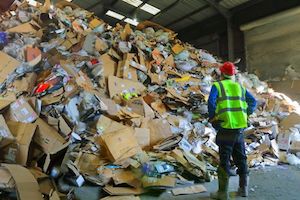
For decades, the U.S. has been shipping about one-third of its recyclables, such as plastics, metal, glass and paper, to China. But in the past year or two, China has stopped accepting these often-contaminated materials. Now cities and large institutions across the U.S. need to figure out what to do with them as part of a new approach to recycling.
Since early 2018, China has banned many scrap materials and has not accepted others unless they meet a strict contamination rate of 0.5 percent or below. U.S. recyclable contamination rates vary, but can reach 25 percent or higher. China’s new policy reflects their decision to recycle more of its domestic waste.
Between The Lines’ Melinda Tuhus spoke with C.J. May, a board member of the Connecticut Recyclers Coalition. He was formerly recycling coordinator at Yale University for two decades, and currently heads the recycling program for Waterbury, Connecticut, though he’s not speaking on behalf of the city’s government. Here, he discusses why China changed its policy, the conversion from separated materials like bottles, cans and paper to a single-stream system, and what methods are now needed to reduce our waste stream.
For more information, visit Connecticut Recyclers Coalition at recyclect.org